
Following devastating flash floods in Nepal, experts are calling for systematic scientific assessments of glaciers to understand and mitigate hazards, alongside the development of a robust land use policy for the Himalayan region. The floods, which killed over 460 people and left thousands missing, are believed to be linked to climate change impacts on glaciers and permafrost.

The flash floods in Nepal's Nuwakot district have left a trail of destruction, damaging homes, roads and infrastructure and disrupting lives.

Nepal is grappling with the devastating aftermath of flash floods, with the death toll reaching 1,356 and nearly 5,000 people, including foreign nationals, still missing. Identification of bodies is a major challenge, with only a fraction identified so far. President Ramchandra Paudel has appealed for climate justice and national unity for relief efforts. International teams, including experts from India and China, are assisting in search and rescue, particularly at hydropower projects where workers are trapped. The country is also working to restore infrastructure and reassure tourists to protect its vital autumn tourism season.

The devastating flash floods wreaked havoc across Nepal, with the ministry of external affairs on Thursday stating that 84 Indian nationals have been rescued while 290 remain uncontactable as the Himalayan nation stepped up search, rescue and relief operations following the disaster that has claimed more than 390 lives.

Nepal's devastating flash floods have claimed 1,127 lives, with thousands still missing a week after the disaster. Rescuers are intensifying efforts to find survivors and recover bodies across affected regions, while police work to identify victims and relocate families from high-risk areas.

The death toll from flash floods in central Nepal has surged to 734, with nearly 2,500 people still missing. India has intensified its rescue and relief efforts, sending additional aid, technical teams, and forensic experts, while also working to locate and rescue over 275 missing Indian nationals.

India has provided 68.5 tonnes of relief materials to flood-hit Nepal and sent technical teams, forensic experts and equipment to assist in search and rescue operations, the Indian embassy said.

Nepal is grappling with a deepening flood crisis as the death toll from devastating flash floods in Rasuwa and surrounding districts has tragically risen to 538, with authorities now warning of a fresh flood threat and initiating evacuations.

Nepal is grappling with severe flash floods that have claimed 270 lives and devastated three districts. Authorities are intensifying rescue and relief operations, with over 40 private helicopter flights delivering supplies and the Nepal Army coordinating efforts. Prime Minister Balendra Shah has visited affected areas to oversee the response.

A massive flash flood originating in Tibet has devastated central Nepal, killing 17 people and leaving nearly 500 missing, including 105 Indians. The deluge, caused by a rock slide near the Nepal-Tibet border, swept through districts, washing away bridges and severely damaging at least a dozen hydropower projects.

The death toll from devastating flash floods in Nepal has reached 1,344, with rescue teams continuing to search for approximately 5,000 missing individuals, including foreign nationals, as identification of victims proves challenging due to the condition of recovered bodies.

Over 900 workers and employees are missing from various hydropower project sites in Nepal following massive flash floods triggered by an ice and rock collapse near the Nepal-Tibet border. Rescue teams, assisted by experts from India and China, are intensifying efforts to locate and extract hundreds believed to be trapped inside tunnels, with 279 already rescued amidst ongoing challenges.

Eight days after devastating floods in Nepal, families of the missing are resorting to symbolic funeral rites using effigies due to diminishing hopes of finding their loved ones and the destruction of their homes. The disaster has also led to a severe shortage of facilities for traditional mourning rituals in Kathmandu, forcing many to seek alternative arrangements or travel.

Nepalese authorities have issued a flood alert for central, western, and eastern parts of the country as water levels in major rivers like Sun Koshi, Budhi Gandaki, Mahakali, and Marsyangdi have crossed alert and danger levels due to continuous monsoon rainfall, urging residents to remain vigilant.

Survivors of the recent devastating floods in Nepal share their harrowing experiences of escaping the raging waters, losing loved ones, and witnessing widespread destruction, as thousands remain missing and families struggle to rebuild their lives.

This might lead to a further outburst, flooding downstream if left unchecked.

Scientists are examining how a possible glacial collapse and ice-rock avalanche may have triggered the devastating flash floods along Nepal's Bhote Koshi River, with preliminary assessments indicating that debris may have temporarily blocked the Lhende River and created a landslide dam that subsequently gave way.

The death toll from devastating flash floods in Nepal has surged to 1,050, with nearly 4,000 people, including foreigners and security personnel, still missing. Rescuers are struggling with intermittent rainfall, rising river levels, and difficult terrain, while expert teams from India and China assist in operations, particularly at hydropower project sites where many workers are believed to be trapped in tunnels.

An NRI couple from Vadodara, Kinnari and Mihir Patel, who travelled to Nepal from New Zealand, have gone missing after devastating flash floods hit the region, prompting their family to appeal to the government for swift rescue action.

'When a glacier collapse or a major flood event does occur, the water will simply reclaim its original path, and anything built in that path will be swept away.'

Extraordinary accounts of survival are emerging from Nepal's devastating flash floods, including a 97-year-old woman rescued from rubble and individuals who fled collapsing settlements, spending nights stranded in forests before rescue.

Bihar and Uttar Pradesh are on high alert following devastating flash floods in Nepal's Gandak river system, prompting emergency measures including evacuations and continuous monitoring by central and state authorities.

'The valley is around 16 km from the Nepal border, and it took just 8-10 minutes for the ice and rocks to reach the Nepal border. You can imagine how fast it must have travelled!'

Sikkim has identified 40 high-hazard glacial lakes, with 16 at the highest risk of catastrophic outbursts. Following a devastating GLOF in 2023, the state is developing India's first dedicated GLOF Risk Mitigation Protocol, using advanced monitoring and interdisciplinary approaches to protect downstream settlements and serve as a model for other Himalayan regions.

Survivors of the recent flash floods along Nepal's Bhotekoshi river have shared harrowing accounts of desperate escapes, witnessing homes collapse, and friends being swept away by torrents of water, mud, and debris. Many described a frantic race to higher ground as the 'monster thing' of water and mud approached.

Massive flash floods in Nepal, triggered by an ice-rock avalanche, have devastated the border town of Timure and other central districts, leaving a rising death toll and hundreds missing. The disaster, described by witnesses as feeling like an earthquake, has claimed entire families and caused widespread destruction to infrastructure. Rescue efforts are underway, with a significant number of missing individuals identified as tourists, including nearly 300 Indian nationals.

Bihar is facing a severe flood situation with the Central Water Commission issuing an 'Orange' bulletin as the Gandak and Ganga rivers flow above danger marks, leading to embankment breaches and inundation in Saran and other districts. Relief and rescue operations are intensifying with NDRF and SDRF teams deployed, and ration packets being air-dropped to affected areas.

Flash floods in Tibet's Gyirong County, near the China-Nepal border, have resulted in five deaths and 558 missing individuals, including 260 foreign nationals. The disaster also caused significant casualties in Nepal and disrupted infrastructure. Rescue operations are underway, and concerns are rising over a newly formed barrier lake that poses a risk of further flooding.

'Hydro-seismicity is a phenomenon that typically shows up during and just after the monsoon.' 'Heavy rain causes water to percolate deep into the rock, and where there are fractures, that water fills the pores and builds up what we call pore water pressure.' 'That pressure can widen existing cracks, and eventually the rock gives way -- which surfaces as tremors.'

'Nobody can say a quake will strike on a particular day or month. It remains a natural event, governed by factors that are only partly understood, even by researchers working on this across the world.'

With the anti-Gyanesh Kumar campaign, Rahul Gandhi is showing he is determined to not let anyone else claim credit for what follows, notes Saisuresh Sivaswamy.

Oriental Insurance has insured around 100 Ganesh pandals this year compared with only 20-30 last year.

Several places in Bihar were jolted by a 5.5-magnitude earthquake that struck Nepal early on Friday, with tremors felt in Muzaffarpur, Samastipur and other bordering districts, officials said.

A three-storey commercial building collapsed near Saket Metro station in south Delhi, resulting in four fatalities. Rescue operations have concluded, and an inquiry into the cause of the collapse has been initiated.
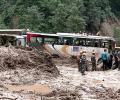
Hundreds of people are facing a shortage of food, safe drinking water and sanitation in Kathmandu following the natural disaster, according to eyewitnesses.

In addition to that, 68 people still remain missing, with 100 more sustaining injuries in the disaster.
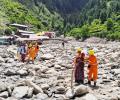
Authorities continue evacuating stranded pilgrims from areas around Dharali village in Uttarkashi, focusing on air rescue and relief operations due to damaged roads. Chief Minister Pushkar Singh Dhami is overseeing the efforts, with central government support.

This is the third earthquake to hit seismically-active Nepal in a week.

At least 65 people, including seven Indian nationals, are believed to be missing after two buses were swept away by a landslide in Nepal and pushed into a swollen river on Friday, according to media reports.

Ramon Magsaysay winner Anshu Gupta, whose non-governmental organisation Goonj has been leading the relief efforts in Nepal which was ravaged by a devastating quake in April this year, speaks to Ankita Mishra.
